DOE Renames NREL as National Laboratory of the Rockies
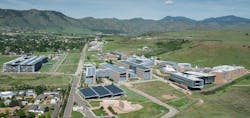
A Colorado national laboratory which has focused on solar and clean energy transition technologies since its founding in the wake of the 1970s oil crisis is having its name changed by the U.S. Department of Energy (DOE) as a way of responding to the new energy crisis around artificial intelligence, data centers and electrification capacity.
The Trump Administration DOE is renaming the National Renewable Energy Laboratory (NREL) into the National Laboratory of the Rockies. The facility in Golden, Colo. was commissioned in the late 1970s as the Solar Energy Research Institute and was renamed as NREL during the first Bush Administration of the early 1990s.
The Mideast Oil Crisis of 1973 inspired the call for sustainable energy research, but today the DOE is prioritizing a broader baseload energy focus to meet future demand from AI, cloud-based and industrial computing.
“The energy crisis we face today is unlike the crisis that gave rise to NREL,” said Assistant Secretary of Energy (EERE) Audrey Robertson, in a statement. “We are no longer picking and choosing energy sources. Our highest priority is to invest in the scientific capabilities that will restore American manufacturing, drive down costs, and help this country meet its soaring energy demand. The National Laboratory of the Rockies will play a vital role in those efforts.”
Generate or Perish
Preparing for the Disruptive Power Hunger of AI
New in Microgrid Knowledge
Indeed, the Trump Administration’s energy department has prioritized a plan forward for growing baseload-level energy capacity such as advanced nuclear and natural gas-fired power. The DOE has terminated billions of dollars in previously approved loan guarantees for renewable and decarbonization projects.
AI, for instance, is an energy-intensive digital tool which is already finding broad adoption in the commercial and industrial sectors. Many forecasters believe the U.S. will require 125 GW or more of new power generation to meet future installed AI factory facilities.
Utility-scale and distributed-energy solar capacity continues to grow, but the newly renamed National Laboratory of the Rockies will reflect the current administration’s call for broader technologies, although some of the small nuclear research and development already is being handled by other national labs such as Idaho and Oak Ridge.
“For decades, this laboratory and its scientific capabilities have pushed the boundaries of what's possible and delivered impact to the nation,” said Jud Virden, Laboratory Director of the National Laboratory of the Rockies. “This new name embraces a broader applied energy mission entrusted to us by the Department of Energy to deliver a more affordable and secure energy future for all.”
NREL has worked within more than 1,000 partnerships with industries, universities, foundations and governments on pilot projects ranging from solar to wind to bioenergy, hydrogen and geothermal.
About the Author
EnergyTech Staff
Rod Walton is head of content for EnergyTech.com. He has spent 17 years covering the energy industry as a newspaper and trade journalist.
Walton formerly was energy writer and business editor at the Tulsa World. Later, he spent six years covering the electricity power sector for Pennwell and Clarion Events. He joined Endeavor and EnergyTech in November 2021.
He can be reached at [email protected].
EnergyTech is focused on the mission critical and large-scale energy users and their sustainability and resiliency goals. These include the commercial and industrial sectors, as well as the military, universities, data centers and microgrids.
Many large-scale energy users such as Fortune 500 companies, and mission-critical users such as military bases, universities, healthcare facilities, public safety and data centers, shifting their energy priorities to reach net-zero carbon goals within the coming decades. These include plans for renewable energy power purchase agreements, but also on-site resiliency projects such as microgrids, combined heat and power, rooftop solar, energy storage, digitalization and building efficiency upgrades.