Speed to Power: How Enchanted Rock is Accelerating Microgrid Deployment for Critical Infrastructure

Houston-based Enchanted Rock is one of the pioneering microgrid and mission-critical distributed energy project companies out there, having delivered on-site, natural gas-fired generation to commercial, industrial (C&I) and mission-critical infrastructure customers since 2006.
Microgrids are not exactly brand-new things, and the concept is much older than 20 years. However, a modern collision course set by both galloping industrial energy demand and the aging grid infrastructure has pushed on-site or co-located power to the forefront in an era of untimely, frustratingly long utility interconnection queues.
Now mix in the rise of AI-enabled data centers and industrial automation. Suddenly, a power resource crisis emerges, and only nimble, fast-moving companies can rush in to fill that gap.
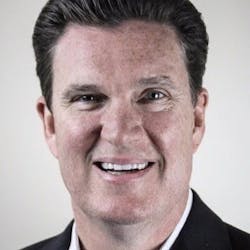
“The real change in our industry is speed to power,” said John Carrington, the former Stem Inc. CEO who now is leading Enchanted Rock into this emerging distributed energy revolution.
“Traditionally Enchanted Rock has been working with C&I, and what’s interesting in C&I now is that when it comes to 5 MW of load or more it’s very hard for the customers to be interconnected; that could take three, four or even six years,” said Carrington, who stepped in as executive chairman of the Enchanted Rock board earlier in 2025 and now is CEO.
“We come in and put the product in, and it becomes on-site prime power (for the customer),” he added. “Once it gets interconnected it can become backup power. Utilities want it because they can pull from it later. Customers want it because it’s getting them up and running.”
Distributed energy and microgrids providing cloud cover
Indeed, the grid infrastructure in the U.S. is at a critical juncture where many big tech and critical infrastructure customers fear that the utility system is unprepared for the rise in demand and next-gen technologies at the edge. The American Society of Civil Engineers graded the U.S. energy infrastructure at a D+ earlier this year in its quadrennial report card.
The biggest driver of change in the power grid sector is the rise of cloud-based data computing and energy-intensive AI development. Hyperscalers such as Google, Amazon, Microsoft, Oracle and Meta are moving beyond their typical reliance on grid interconnection or renewable power purchase deals—which invest in clean energy but do not link directly to the customer—to seek out microgrid or ‘energy park’ solutions with companies such as Enchanted Rock, Schneider Electric, Bloom Energy and others.
Perhaps more than 100 GW of new data center capacity will be built over the next five years or so, and the grid generation and transmission sector likely cannot facilitate that pace of growth by itself. And it takes too long even if they could, which is not acceptable in the global race to AI leadership.
Interconnection too slow for the hyperscalers
“Speed-to-power is increasingly central to how data centers plan and scale,” Carrington noted.
Enchanted Rock already is working with Microsoft on powering a new data center in San Jose. The AI factory acceleration should only push that rush to expand power generation capacity even further—otherwise a resource adequacy crisis is created, and affordability becomes a major challenge for regular customers.
This pressure to produce baseload-type generation in a shorter timeline than utility interconnection currently allows likely will produce more natural gas connections to off-grid power plays. Enchanted Rock has always developed gas-fired power solutions, but even Carrington sees room for diversity at the top of the distributed generation scale.
“Customers are asking what is the solution?” for dealing with power spikes and the threat of load shedding via the outmanned grid, he pointed out. “I think batteries are the only solution (currently), and we’ll see more of those.”
Many paths to sustainability and resiliency
Enchanted Rock and others are fully engaged in developing hybrid distributed energy and microgrid projects which add solar and batteries along with the gas-fired generation as prime power.
“We’re seeing more and more developers with solar and battery storage,” Carrington said. This is because many high-end customers want sustainability along with power resiliency, but solar alone cannot provide prime power.
A new era for Enchanted Rock
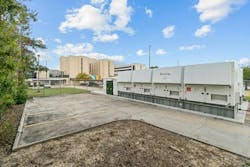
Enchanted Rock itself is not immune to the current pace of change either from its customers or at the top of its own corporate ladder. Founder and long-time CEO Thomas McAndrew transitioned out of the CEO role earlier this year and remains actively involved as a board member and strategic advisor, focusing his energies on long-term strategies rather than day-to-day operations.
Carrington, who guided battery storage technology developer Stem from startup to initial public offering, was brought in to lead the Enchanted Rock board. After a transition period, he was named CEO only weeks ago.
Does this mean that Enchanted Rock itself will increase its capital by going public? Carrington replied that the company is open to a range of strategic paths but that the clear priority today is meeting unprecedented demand for on-site power development.
“We have to execute on what we have in front of us,” he said. “Let’s keep our heads down, and we’ve got some massive programs ahead. There’s a lot to do around here.”
All hands on deck. Enchanted Rock has been busy not just on the data center front. Recently it announced a partnership with utility Entergy Louisiana to develop gas-fired microgrids for Baton Rouge General’s medical facilities along the Gulf Coast.
The company also is partnering with utilities to develop new operational models for microgrids for large-load demand.
At the same time, an unprecedented change in power dynamics requires even deeper engagement with local, state and federal stakeholders to help shape regulatory frameworks which can enable an historic expansion in capacity, whether it’s on-site, co-located or distributed energy resources.
“Having customers and end users saying we want another gigawatt (GW)—it’s an incredibly interesting time.” Carrington said.
Enchanted Rock is part of the planning behind the upcoming Microgrid Knowledge Conference 2026. Microgrid Knowledge will be May 4-6 at the Renaissance SeaWorld in Orlando.
About the Author

Rod Walton, EnergyTech Managing Editor
Managing Editor
For EnergyTech editorial inquiries, please contact Managing Editor Rod Walton at [email protected].
Rod Walton has spent 17 years covering the energy industry as a newspaper and trade journalist. He formerly was energy writer and business editor at the Tulsa World. Later, he spent six years covering the electricity power sector for Pennwell and Clarion Events. He joined Endeavor and EnergyTech in November 2021.
Walton earned his Bachelors degree in journalism from the University of Oklahoma. His career stops include the Moore American, Bartlesville Examiner-Enterprise, Wagoner Tribune and Tulsa World.
EnergyTech is focused on the mission critical and large-scale energy users and their sustainability and resiliency goals. These include the commercial and industrial sectors, as well as the military, universities, data centers and microgrids. The C&I sectors together account for close to 30 percent of greenhouse gas emissions in the U.S.
He was named Managing Editor for Microgrid Knowledge and EnergyTech starting July 1, 2023
Many large-scale energy users such as Fortune 500 companies, and mission-critical users such as military bases, universities, healthcare facilities, public safety and data centers, shifting their energy priorities to reach net-zero carbon goals within the coming decades. These include plans for renewable energy power purchase agreements, but also on-site resiliency projects such as microgrids, combined heat and power, rooftop solar, energy storage, digitalization and building efficiency upgrades.